Best Mini & Small Recording Devices for Discreet Note-Taking (2026)
You're across the table from someone whose every word matters. A client renegotiating terms. A doctor rattling off a treatment plan. A source who won't repeat themselves. Pulling out your phone to type feels rude and breaks the moment. So you nod, try to hold it all in your head, and lose half of it by the time you reach the parking lot.
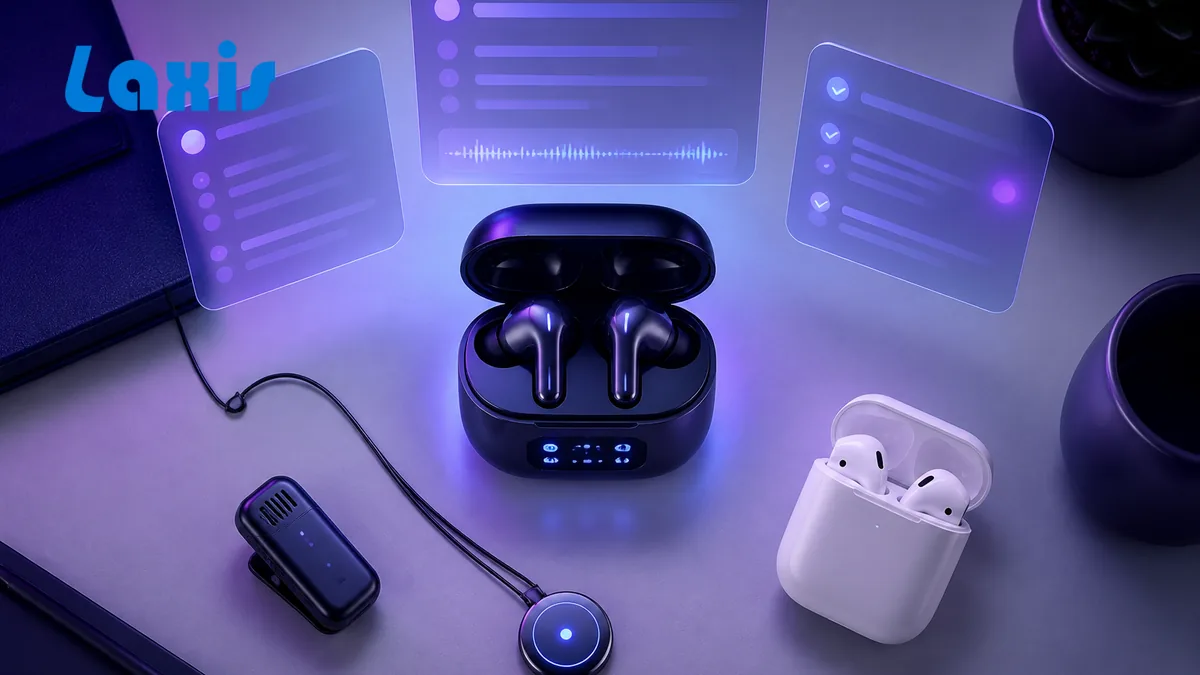
That's the whole reason small recording devices exist. The good ones fade into the background so the conversation stays human, then hand you a clean record afterward. And in 2026 there's a real split in the market: some devices just capture audio, while others turn that audio into notes you can actually search. If you want the second kind, our top pick is the OSO AI Earbuds by Laxis — they look like ordinary earbuds but record, transcribe and summarize in-person conversations, so you walk away with notes, not a two-hour file to relisten to. Below, an honest ranking of the best small recording devices, who each one is really for, and the consent rules you need to know before you press record.
What discreet actually means (and why AI changed the math)
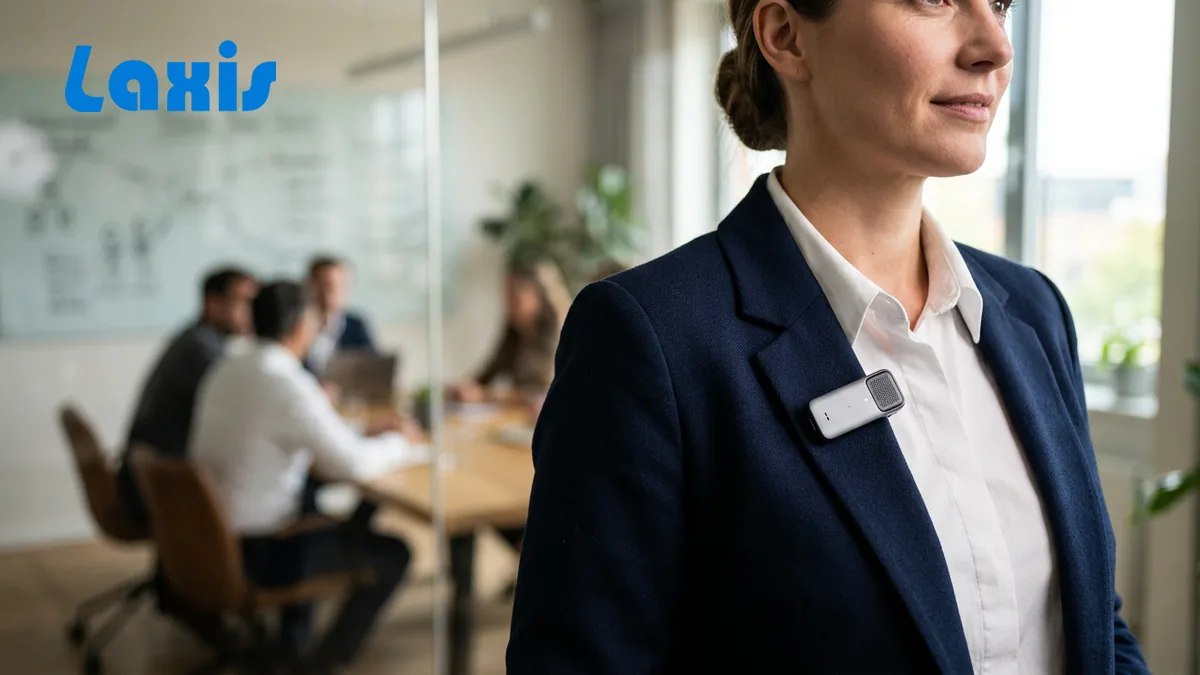
"Discreet" gets used loosely, so let's define it. A discreet recorder is one that doesn't disrupt the moment: no giant red button, no phone held up like a microphone, nothing that makes the other person clam up. That's different from hidden, which usually means concealed on purpose, and it's very different from legal, which depends entirely on where you are and who's in the room. Keep those three ideas separate and you'll make better decisions.
The bigger shift is what happens after you stop recording. A classic voice recorder gives you an audio file. That's it. If you recorded a 45-minute meeting, you now own 45 minutes of listening to get your notes. AI devices collapse that: they transcribe the audio, tag who said what, and generate a summary with the decisions and action items pulled out. For most people taking notes in a meeting, an interview or a sales call, the summary is the actual goal. The audio is just the raw material. That's why the ranking below leads with AI-first devices, then covers the offline classics for people who genuinely want plain audio and nothing else.
Tip 1 — Decide what you want back before you buy.
Ask one question: do I want audio, or do I want notes? If you'll transcribe recordings yourself or need pristine files (musicians, journalists archiving raw tape, legal record-keeping), buy a dedicated voice recorder. If you want a searchable summary with action items and barely want to touch the file, buy an AI device. Buying the wrong category is the most common and most expensive mistake here.
The best small recording devices in 2026, ranked
1. OSO AI Earbuds by Laxis — best for turning conversations into notes
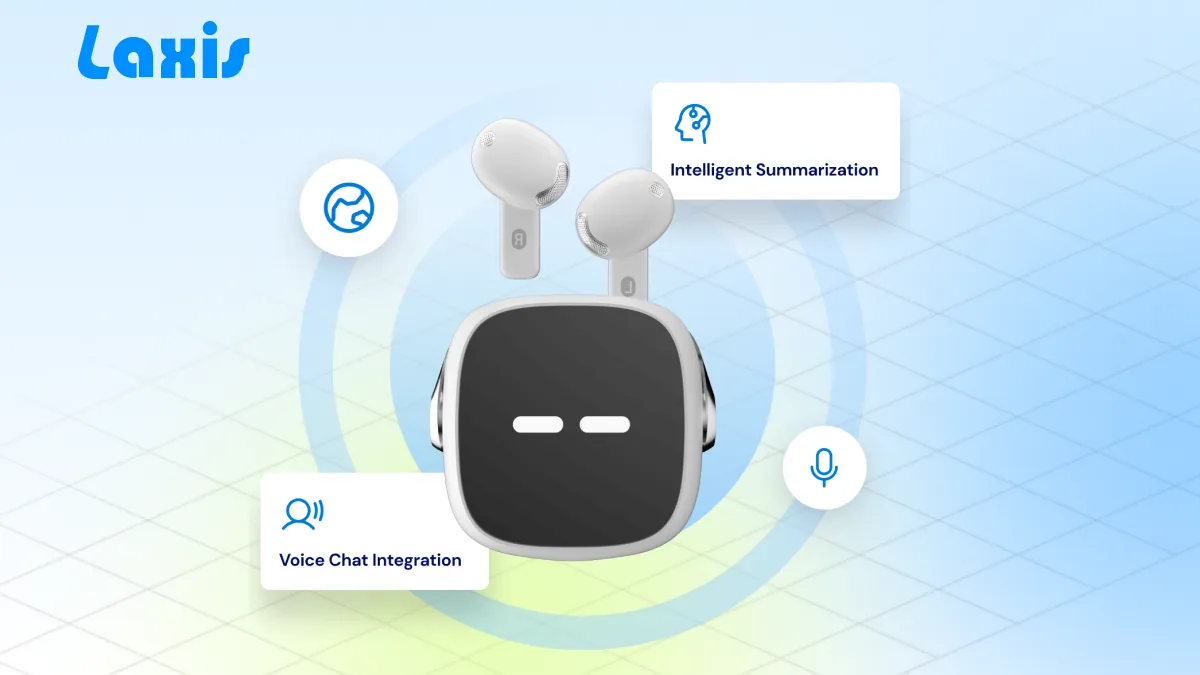
These win the top spot because they solve the real problem, not just the recording part. The OSO AI Earbuds look and work like normal open-ear earbuds, so nobody in the room clocks them as a recorder, and they capture in-person conversations, calls, meetings and voice memos, then transcribe and summarize them across 100+ languages. Because they're built by Laxis, the recording flows straight into the Laxis app, where you get speaker-labeled transcripts, summaries, extracted action items and next steps, plus a sync to your CRM if you're using this for sales. You walk away with notes you can search, not a file you have to relisten to. Hardware is $159 with a basic plan included for life, and Premium AI runs $120/year (about $10/month) for unlimited transcription and advanced reports. Battery is roughly 6 hours of continuous use, or 20+ hours with the charging case.
The honest tradeoff: the AI transcription and summaries need connectivity and the paired app to shine, so this isn't the device for someone who wants a purely offline, no-account, no-subscription box. If your only goal is raw audio you keep entirely on-device, a dedicated recorder further down this list fits better. But if you want notes, the earbuds are hard to beat.
2. Plaud Note & Plaud NotePin — best pocket/MagSafe AI recorder
Plaud has become the default name in standalone AI recorders, and for good reason. The Plaud Note ($159) is a credit-card-thin device that magnetically clips to the back of your phone and records both in-person conversations and phone calls, while the NotePin ($159) is a wearable capsule you can clip on or wear as a pendant, rated for 20 hours of continuous recording and 40 days of standby. Both transcribe in a claimed 112 languages with speaker labels, and the free starter plan includes 300 transcription minutes a month. Plaud is best for people who don't want anything in their ears and prefer a dedicated gadget they can hand-hold or set on a table. The tradeoff: it's another object to carry and charge, and the richest AI features sit behind a paid plan once you burn through those free minutes.
3. Limitless Pendant — best always-on wearable (with a big caveat)
The Limitless Pendant is the poster child for the "capture your whole day" idea: a small aluminum clip you wear that quietly logs conversations and lets you search them later. On paper it's compelling, with a marketed battery around 100 hours. In practice, real-world active use lands closer to 8 to 10 hours, and there's a major caveat as of 2026: Meta acquired Limitless in December 2025 and stopped selling the pendant, with existing users moved to a free unlimited plan and no new development. If you already own one, it still works. As a fresh purchase it's hard to recommend right now, but it's worth knowing about because the always-on wearable category (including options like the $49 Bee) is where a lot of the experimentation is happening.
4. Sony ICD-UX570 or Olympus WS-883 — best offline, no-AI voice recorder
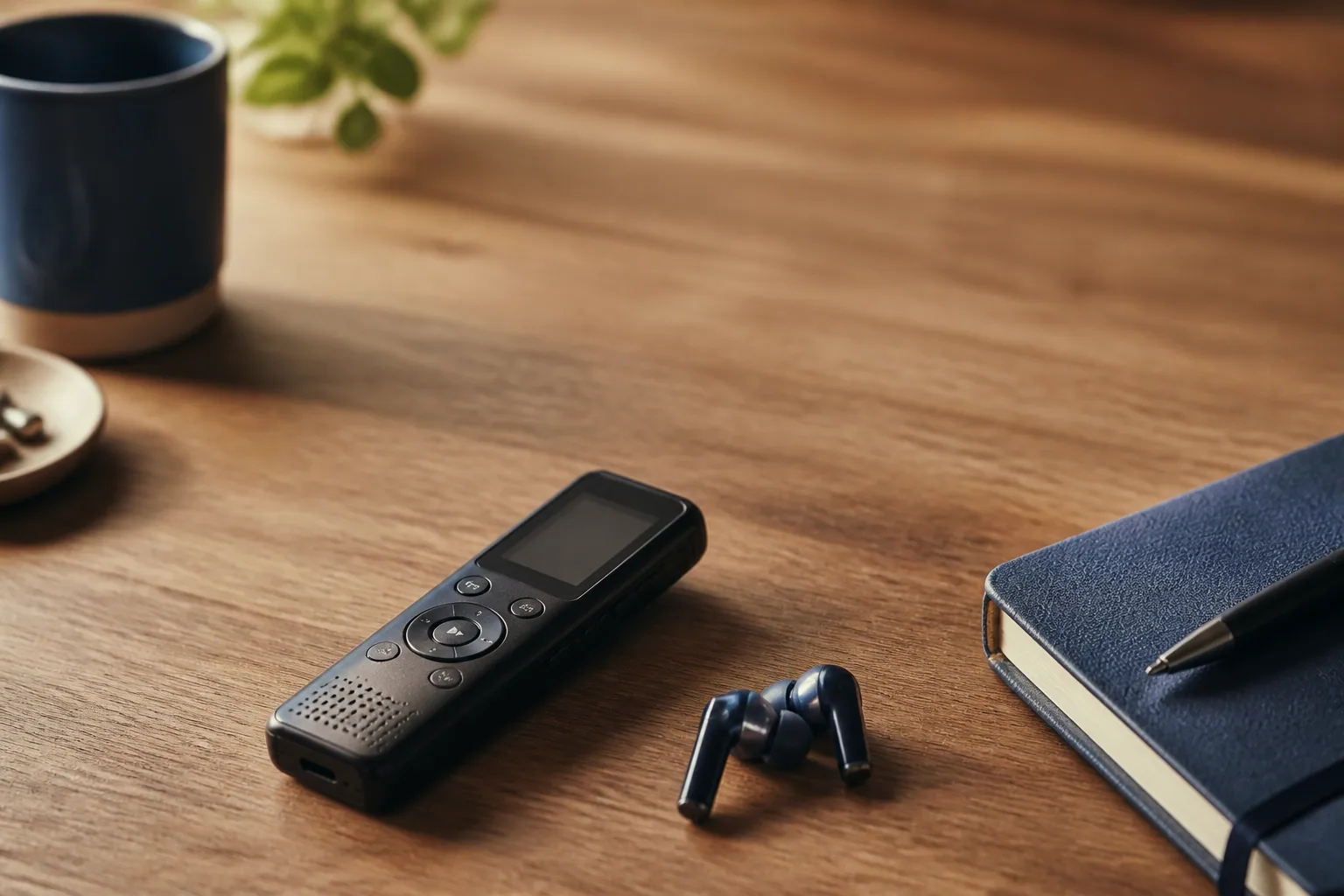
Sometimes you want the opposite of AI: a device that just records, keeps everything local, and runs forever. That's where classic digital voice recorders still win. The Sony ICD-UX570 is the balanced pick for most people, small enough to slip in a shirt pocket, while budget models like the Sony ICD-PX370 push up to 57 hours of recording on a charge and the Olympus DM-720 claims around 52 hours. No subscription, no cloud, no account. These are ideal for lectures, field research, musicians capturing ideas, or anyone who wants recordings that never leave their hand. The tradeoff is obvious: you get an audio file and nothing more. Transcribing and summarizing is on you.
5. Your phone — free, capable, and the least discreet option
Don't overlook what's already in your pocket. Every modern phone records audio for free, and paired with a transcription app it can produce solid notes. The problem is discretion: setting your phone face-up on a table, screen glowing, is the least subtle way to record a conversation, and most people notice. Use your phone when discretion doesn't matter (recording a lecture, dictating a memo to yourself, capturing a call you're on) and reach for a dedicated device when the moment needs to feel natural.
Tip 2 — Test mic pickup in your real environment before you rely on it.
Marketing specs are measured in quiet rooms. A café, a car, a conference hall with a droning HVAC system, all of it degrades pickup. Before an important meeting, record a two-minute test in a similar setting and check whether both voices come through clearly across the table. Small devices with beamforming or multiple mics handle noise better, but nothing beats a real-world dry run.
Before you press record: the consent rules you actually need
This is the part most buying guides skip, and it's the part that can get you in real trouble. Recording-consent laws vary by state and country, and the key distinction is one-party versus all-party consent. To be clear up front: this is general information, not legal advice, and it doesn't cover every situation.
In the U.S. as of 2026, 38 states plus Washington D.C. follow one-party consent, which means if you're part of the conversation, you can record it without telling anyone else. But 12 states require all-party (often called two-party) consent, where everyone in the conversation has to agree: California, Connecticut, Delaware, Florida, Illinois, Maryland, Massachusetts, Montana, New Hampshire, Oregon, Pennsylvania and Washington. The safe habit is simple: if there's any chance an all-party state is involved, or if the call crosses state lines, treat it as all-party and get consent. Outside the U.S., rules differ again, sometimes significantly, so check locally before recording abroad.
A practical note on the devices themselves: many wearables, including the Bee pendant, deliberately show a light when recording precisely because "discreet" should never mean "secret." The most defensible approach in almost every setting is to record openly and just say, "Do you mind if I record this so I don't miss anything?" People almost always say yes, and you're covered.
How to choose the one that fits your life
Strip away the specs and it comes down to three questions. First, notes or audio? That decides your category before anything else. Second, in your ear, on your body, or in your hand? Earbuds are the most invisible in professional settings, wearables suit all-day capture, and handhelds suit deliberate, sit-down recording. Third, do you mind a subscription? AI features almost always ride on a plan; offline recorders never do.
If you spend your days in meetings, interviews or sales calls and you want to leave each one with a written record instead of a stack of audio files, an AI device earns its keep fast. If you're a musician, a field researcher or anyone who needs raw, private, long-running audio, a $60 Sony or Olympus will outlast and out-simplify every AI gadget on this list. Both answers are correct. They're just answers to different questions.
The bottom line
The most interesting thing about small recording devices in 2026 isn't the shrinking hardware, it's that the recording is quietly becoming the least important part. The value has moved to what happens after you press stop: the transcript, the summary, the action item that ends up in your CRM. A device that captures perfect audio and leaves you 45 minutes of listening has solved the wrong problem. Buy for the output you want on the other side, and the rest of the decision gets easy.
Frequently asked questions
What is the best small recording device for meetings and interviews?
If you want notes rather than raw audio, AI-enabled devices lead in 2026. The OSO AI Earbuds by Laxis record, transcribe and summarize in-person conversations across 100+ languages and sync to the Laxis app, all for $159 in hardware with a basic plan included for life. Pocket AI recorders like the Plaud Note ($159) and NotePin ($159) are strong alternatives. For pure offline audio with no AI, a Sony ICD-UX570 or Olympus voice recorder is more private and lasts far longer per charge.
How long do small AI recording devices last on a charge?
It varies widely. The OSO AI Earbuds give about 6 hours of continuous use and 20+ hours total with the charging case. Plaud NotePin claims 20 hours of continuous recording and 40 days of standby. The Limitless Pendant advertises around 100 hours but real-world active use is closer to 8 to 10 hours. Classic dedicated voice recorders like the Sony ICD-PX370 win outright, with up to 57 hours of recording on a single charge.
Is it legal to record a conversation on a small device?
It depends on where you are. As of 2026, 38 U.S. states plus Washington D.C. follow one-party consent, meaning you can record a conversation you are part of. Twelve states, including California, Florida, Illinois, Pennsylvania and Washington, require all-party consent. Laws also differ by country. This article is not legal advice; when in doubt, ask for consent or check the rules where you and the other party are located.
Do I need a subscription to use an AI recording device?
Usually for the AI features, yes. The OSO AI Earbuds include a basic plan for life with the $159 hardware, and Premium AI runs $120/year for unlimited transcription and reports. Plaud includes 300 free transcription minutes per month and charges for more. A traditional voice recorder has no subscription at all, but it also gives you audio files instead of searchable, summarized notes.
What is the most discreet recording device?
Wearables and earbuds tend to be the least conspicuous because they look like ordinary accessories. Earbuds such as the OSO AI Earbuds read as normal headphones, and a small clip-on recorder or pendant reads as jewelry or a badge. That said, discreet is not the same as hidden or legal. Many devices show a recording light on purpose, and secretly recording where all-party consent is required can break the law.