Dictaphone vs AI Recorder: Which Should You Actually Buy in 2026?
You're standing in front of a wall of recording gear, or more likely a browser tab full of it, and the prices range from $40 to $400. Half the listings say "dictaphone." The other half say "AI voice recorder." Same shape, wildly different promise. So which one actually belongs in your bag?
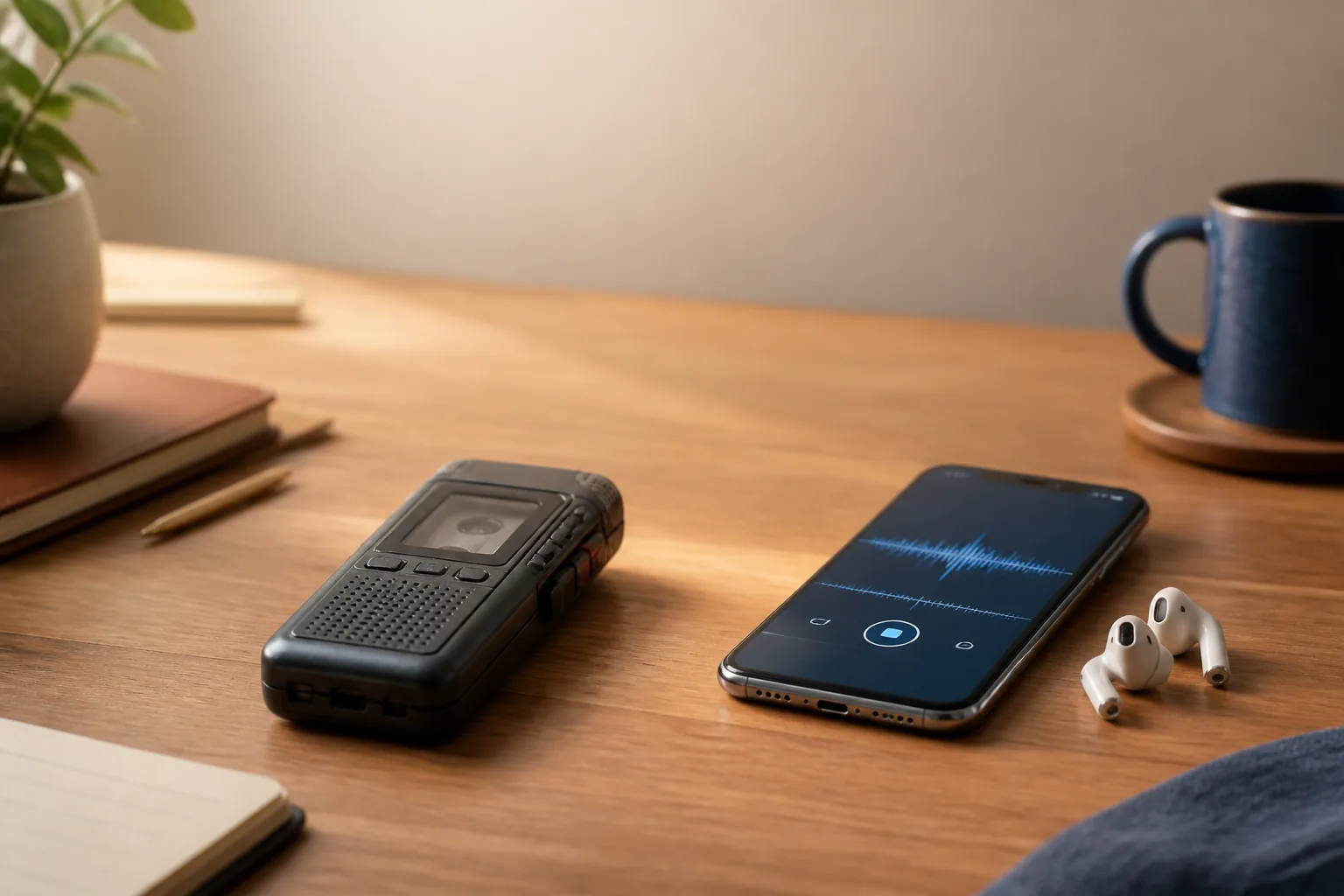
Let's settle the definitions before the marketing fog rolls in. A dictaphone is a dedicated handheld voice recorder. It captures your voice, stores it as an audio file, and plays it back. That's the whole job. The word goes back to the old Dictaphone brand and the executives, lawyers, and doctors who dictated letters and case notes into them. A modern dictaphone is simpler than your phone on purpose: one big record button, a uni-directional mic aimed at a single speaker, and overwrite or insert controls so you can patch a sentence without re-recording the lot. Press record, talk, done.
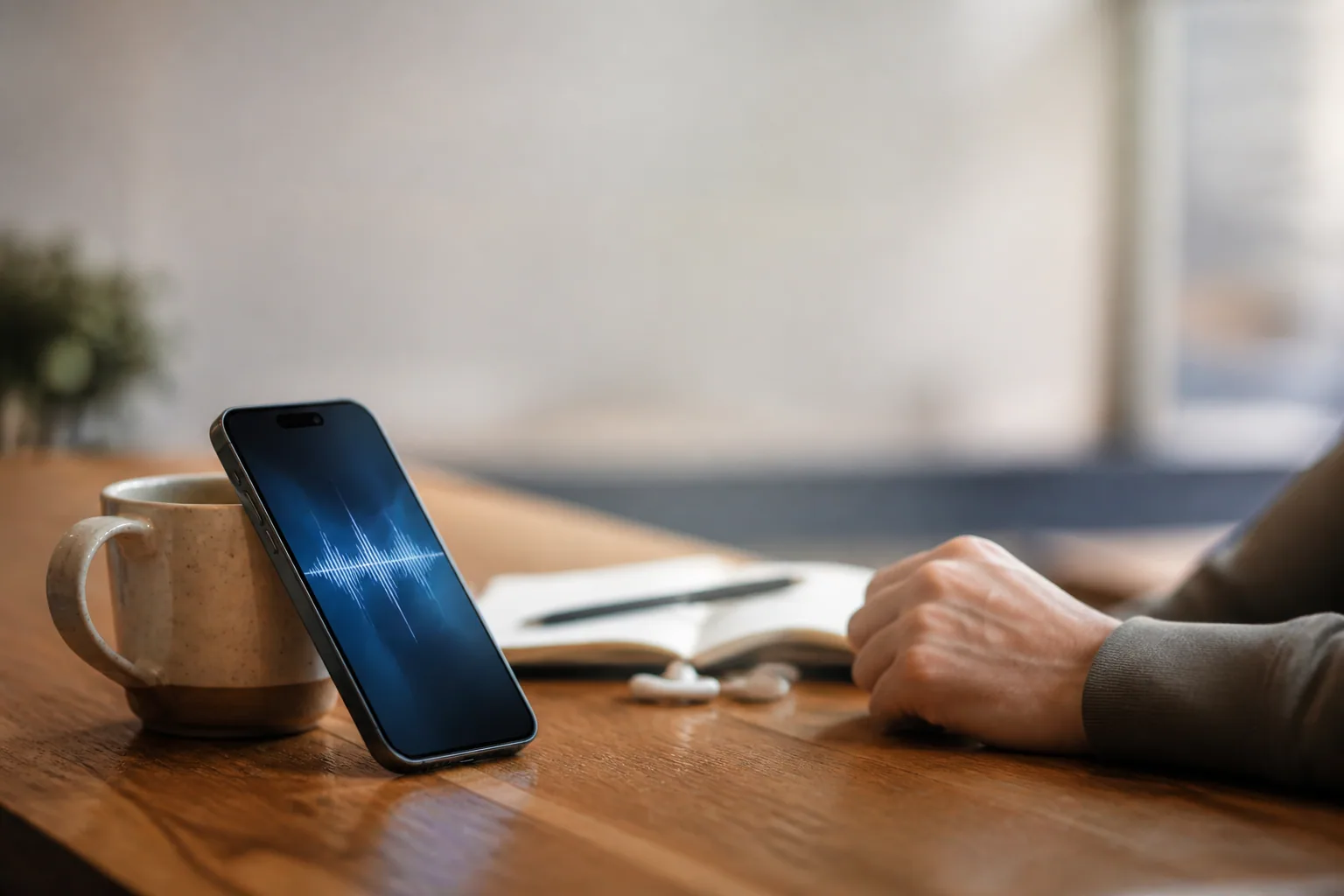
An AI recorder looks nearly identical in your hand. The difference is everything that happens after you stop talking. Instead of handing you a file to replay, an AI voice recorder runs speech-to-text, separates and labels who said what, tags the action items and decisions, and spits out a structured summary, usually with keyword search and cloud sync on top. One device gives you sound. The other gives you a searchable document. Knowing which of those you actually need is the entire decision.
What a dictaphone does, and what AI adds on top
Here's the honest split. A dictaphone is a recording device. An AI recorder is a recording device plus a small transcription-and-summary service riding along, either on the device or in an app it syncs to.
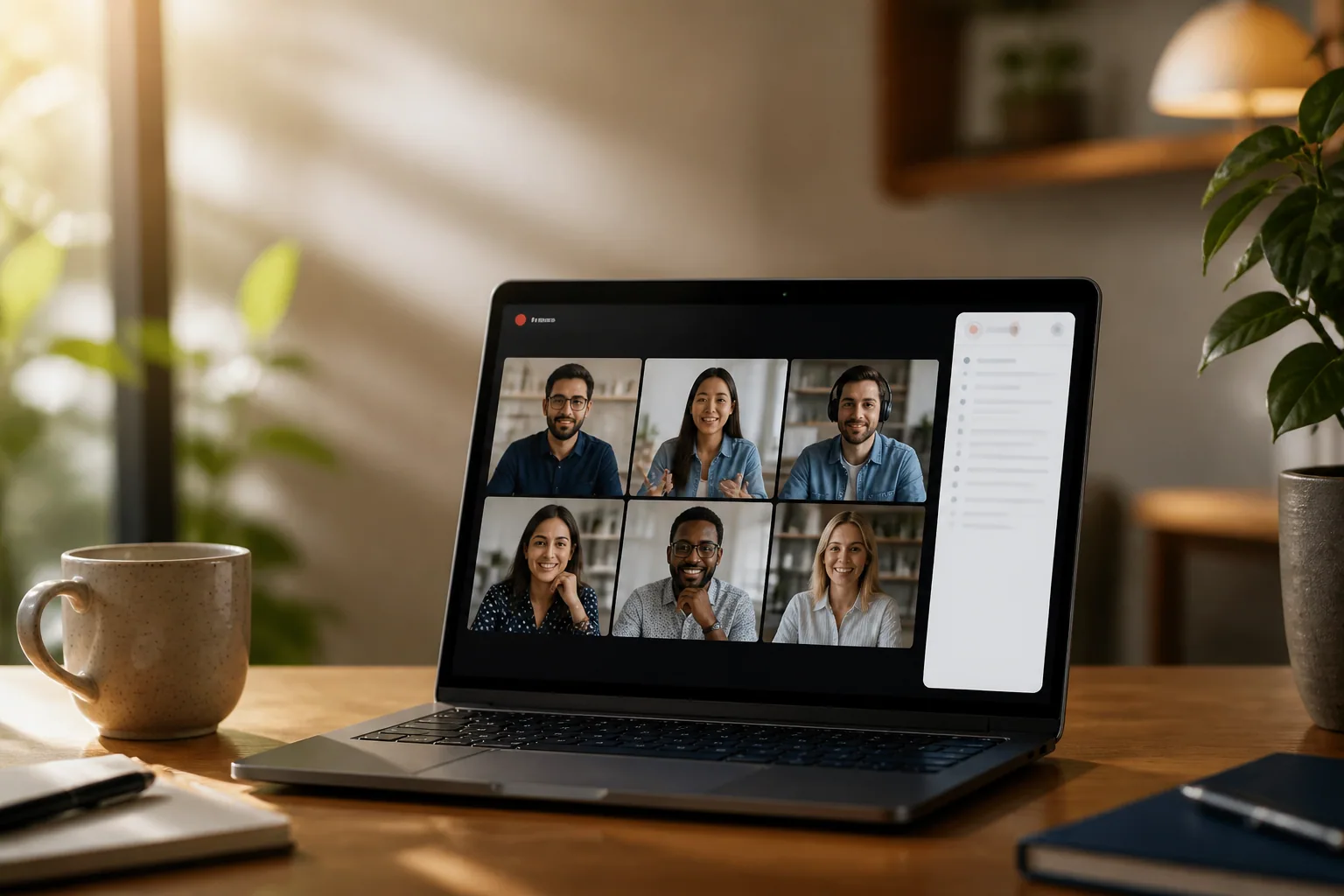
The traditional path looks like this: you record an hour of audio, then later you sit down and either listen back at 1.5x speed or pay someone to type it out. That manual step is the cost. The AI path collapses it. You get accurate transcripts, speaker separation, and a structured summary, often within minutes of pressing stop. Dedicated AI voice recorders have become one of the fastest-growing slices of the productivity-gear market for exactly that reason, and it's not subtle when 86% of meetings in 2025 had at least a few remote participants and somebody still needs the notes.
What you're really comparing:
- Dictaphone: audio capture, playback, long battery, offline storage, dead-simple controls. No text, no summary, no internet required.
- AI recorder: all of the above (sometimes), plus automatic transcription, speaker labels, AI summaries, keyword search, and cloud sync. Often a subscription attached.
Notice the "sometimes." A few AI recorders sacrifice battery life and offline reliability to fit the smarts in. That trade-off is the hinge the rest of this guide turns on.
The decision, by use case
There's no universal winner here, and anyone who tells you otherwise is selling one. The right answer shifts depending on whether you need the audio or the words. Run through whichever of these sounds like your week.
Journalists and interviewers
This one splits. For the recording itself, a quality dictaphone still earns its keep, and pros lean on workhorses like the Tascam DR-05X or Zoom H1n because audio fidelity is the product. A clean, defensible audio file matters when accuracy is your reputation, and an AA-battery recorder keeps rolling through a long shoot with no app crashing mid-sentence. But the transcription afterward is brutal manual labor, and that's where an AI recorder earns its money. Plenty of reporters record on dedicated hardware and run an AI transcription pass after, getting the best of both. If your interviews are mostly one-on-one and quiet, an AI voice recorder alone can cover the whole loop.
Students and lectures
Lean AI. A student doesn't usually need broadcast-grade audio; they need to find the three minutes where the professor explained the thing that's on the exam. Keyword search across a transcript does that in seconds. A summary turns a 50-minute lecture into a page of notes you'll actually reread. The catch is battery and reliability: back-to-back classes drain a smart device faster than a simple one, so check the runtime before you trust it with a full day.
Doctors and dictation
This is where the plain dictaphone refuses to die, and for good reason. Dictating notes after a patient has left raises no consent issue at all, because there's no live conversation being captured, just you narrating into a device. A no-cloud dictaphone keeps protected health information off the internet entirely, which makes compliance officers very calm. The moment audio captures a live patient conversation, though, it becomes PHI under HIPAA, and any cloud-based AI recorder needs the right agreements and security in place. Some clinics adopt AI tools cleared for healthcare; many keep a simple offline recorder precisely to avoid the question.
Sales and meetings
Lean AI, hard. Nobody in sales wants the audio file; they want the next steps, the objection the buyer raised, and the follow-up email half-written. A dictaphone gives you a recording you'll never replay. An AI recorder gives you a summary, action items, and notes that sync where your team can see them. If you're recording calls to actually act on them, the text is the deliverable and the audio is just raw material.
Field notes and quick capture
Toss-up, leaning dictaphone for ruggedness and AI for everything after. If you're a contractor, researcher, or anyone muttering observations into a device between tasks, simplicity and battery win in the moment. But those scattered voice memos are useless until they're text you can search. A device or app that auto-transcribes turns a folder of "uh, note to self" clips into something you can actually act on weeks later.
Buying tip #1: A good external mic beats a pricier recorder almost every time. A mid-range device with a clean lavalier or XLR mic will out-record a premium unit relying on its built-in mics, because better input audio means better fidelity and, on AI devices, dramatically better transcription accuracy. If a recorder only has a 3.5mm jack and you're going serious, look for XLR inputs, which reduce interference and survive abuse. Spend the marginal dollar on the mic, not the chassis.
When a plain dictaphone still wins
It's tempting to assume the smart device is automatically the better one. It isn't, and pretending otherwise gets people to buy the wrong thing. A plain dictaphone is the right call in four specific situations, and they come up more than you'd think.
Offline privacy. No cloud connection means nothing to breach, nothing to subpoena from a third-party server, nothing syncing where you didn't intend. For sensitive material, a device that physically can't phone home is a feature, not a limitation.
Battery life. Recorders that take AA batteries or push past 30 hours of continuous recording simply outlast their AI cousins. Field work away from outlets is exactly where the simpler device shines, because a dead recorder transcribes nothing.
Dead-simple operation. One button, no setup, no account, no app update breaking the morning you need it. For witnesses, elderly users, or anyone who just wants to press record under pressure, fewer features is the feature.
Regulated or no-cloud environments. Some legal, medical, and government settings forbid cloud processing of certain audio outright. A standalone recorder with local storage sidesteps the entire policy fight.
If your honest answer is "I just need the audio, and I need it to work every single time," a dictaphone is not a compromise. It's the correct tool, and you'll have spent less.
When an AI recorder is worth it
The flip side is just as clear. An AI voice recorder earns its premium when the text and the summary are the point, not the audio. If you find yourself recording things specifically so you can read them later, search them, share them, or act on them, you're paying a tax every time you skip the AI step and transcribe by hand.
The math is simple. Listening back to an hour of audio to pull out five decisions takes the better part of an hour. An AI recorder hands you those five decisions, speaker-labeled and searchable, in the time it takes to make coffee. Multiply that across a week of meetings, lectures, or calls and the device pays for itself in recovered hours, not features.
One real caution on pricing models. Plenty of AI recorders run on subscriptions: cheap hardware, recurring monthly fee for transcription. Others, like classic Sony and Zoom units, you buy once and own. The "no subscription" pitch usually means a capped or one-year allowance bundled in, so read what happens in year two before you commit. The cheapest sticker isn't always the cheapest device.
Buying tip #2: Check your local recording-consent laws before you press record on anyone but yourself. In the US, 37 states are one-party consent, but 11 are all-party consent (California, Florida, Illinois, Maryland, Massachusetts, Pennsylvania, Washington, and others), where everyone in the conversation must agree first. When people are in different states, follow the stricter all-party rule. This applies to dictaphones and AI recorders equally, hardware doesn't change the law. A five-second "mind if I record this?" saves a world of trouble.
The honest middle: record on hardware, think in software
For meetings and in-person conversations specifically, the cleanest setup is often a hybrid: capture with good hardware, then let software do the transcription and summary. This is the lane Laxis sits in as the AI-recorder option. The app records, transcribes, and summarizes in 40+ languages and syncs the notes where your team works, while OSO AI Earbuds handle the in-person capture so the conversation across the table comes through clearly. It pairs naturally with Zoom, Meet, and Teams, and there's a free plan to test the workflow before you spend anything. It won't out-battery a stripped-down offline dictaphone for pure audio recording, and it isn't trying to, but if what you actually want is the text and the next steps rather than a file to replay, that's the trade it's built to make.
The broader point holds whatever brand you pick: separate the capture from the thinking. Record on whatever gets clean audio reliably, and let an AI layer handle the part humans hate, which is turning sound into searchable, summarized words.
Need the words, not just the audio? If your meetings and conversations are worth recording, they're worth turning into searchable notes, summaries, and follow-ups automatically. Laxis records, transcribes, and summarizes in 40+ languages, with OSO AI Earbuds for in-person capture. Try Laxis Free
The bottom line
The dictaphone-versus-AI-recorder choice isn't really about technology. It's about what you do with the recording after you stop talking. If the audio file is the finish line, a simple, long-lasting, offline dictaphone is a smart, cheap, reliable buy that'll outlive trendier gear. If the finish line is text you'll search, share, and act on, paying for AI is buying back the hours you'd otherwise spend transcribing. The mistake isn't picking one over the other, it's buying the smart device and only ever using the record button, or buying the simple one and resenting every hour you spend typing it up.
Frequently asked questions
What is a dictaphone?
A dictaphone is a dedicated handheld voice recorder built to capture speech and play it back. It records audio and stores it as a file, and that's it. Originally aimed at executives, lawyers, and doctors dictating notes, modern dictaphones add features like overwrite and insert for editing dictation on the fly, plus uni-directional mics tuned for a single speaker. They don't transcribe, label speakers, or summarize on their own.
What does an AI recorder add over a plain dictaphone?
An AI recorder runs speech-to-text, detects and labels different speakers, tags action items and decisions, and generates structured summaries, usually plus keyword search and cloud sync. Where a dictaphone hands you an audio file you still have to listen to, an AI voice recorder hands you searchable text and a summary within minutes. Many AI recorders also handle multiple languages; Laxis, for example, works in 40+ languages.
When is a plain dictaphone still the better buy?
Choose a plain dictaphone when you need offline privacy, very long battery life, and dead-simple operation. Recorders that take AA batteries or offer 30-plus hours of continuous recording keep going where AI devices die, and a device with no cloud connection is easier to clear in regulated or no-cloud environments. If you only ever need the audio file, not the text, the extra AI features are weight you're not using.
Do I need consent to record a conversation?
It depends on where you are. In the US, 37 states follow one-party consent, while 11 are all-party consent (including California, Florida, Illinois, Maryland, Massachusetts, Pennsylvania, and Washington), where everyone in the conversation must agree before you record. When parties are in different states, follow the stricter all-party rule. Dictating your own notes after a conversation ends raises no consent issue, because there's no live conversation being captured.
Can an AI recorder replace a dictaphone for doctors?
Often, but check the compliance fit first. Solo dictation of notes after a patient leaves works fine on either device. The moment a recording captures a live patient conversation, that audio becomes protected health information under HIPAA, so any cloud-based AI recorder needs an appropriate agreement and security controls in place. Many clinics keep a no-cloud dictaphone precisely to sidestep that, while others adopt AI tools cleared for healthcare use.