Emergency Meeting: When to Call One (and How to Run It Right)

It's 4:47 on a Friday. A message lands: "Emergency meeting, conference room, now." Your stomach drops. You drop the thing you were finally in flow on, walk over fast, and find out the cause for alarm is a slide that needs reformatting before Monday.
That moment is where the phrase loses its meaning. An emergency meeting is supposed to be the fire alarm of your work calendar, the thing that earns the right to interrupt everything else. But when "urgent" gets stapled onto every passing worry, the alarm stops working. So before we get to how to run a great one, it's worth being honest about a harder question: most of the meetings people call emergencies aren't. The phrase even shows up in pop culture now, shouted across a game table in Among Us. Fun there. Less fun when it's your team at 4:47 on a Friday.
What actually qualifies as an emergency meeting
There's a clean test that cuts through almost every judgment call. A situation earns an emergency meeting when three things are true at the same time: it's unexpected, a delay would cause real harm, and waiting for the normal cadence isn't practical. Miss any one of those and you probably don't have an emergency. You have something important, which is not the same thing.
In practice, a short list of situations clears that bar:
- A live production outage or security incident. The site is down, payments are failing, or there's an active data breach. Every minute genuinely costs money or trust, and the people who can fix it need to coordinate in real time.
- A PR or safety crisis. A story is about to break, a product is hurting someone, or a public statement is going out whether you weigh in or not. The window to shape it is measured in hours.
- A major deal or marquee customer about to walk. A seven-figure contract is wobbling, or a flagship account just sent the "we need to talk" email. A same-day conversation can change the outcome; a same-week one often can't.
- A sudden leadership or funding change. A founder resigns, a round falls through, an acquisition leaks. People will fill the silence with rumor unless leadership gets in a room quickly.
Notice what these share. Each one is genuinely unexpected, the clock is real, and there's a specific decision a small group of people can make right now to change what happens next. That last part matters most. If there's no decision to be made yet, you don't need a meeting. You need more information, which usually arrives faster async.
When it should be async or wait for the regular cadence
Here's the uncomfortable flip side. The honest answer to "should I call an emergency meeting?" is usually no. Real urgency is rare. If everything is urgent, nothing is, and most of what feels pressing at 4:47 can wait until 9 a.m. without anyone getting hurt.
A few patterns masquerade as emergencies and almost never are. A project that's running behind isn't an emergency; it's a status update, and a written one travels better. A disagreement between two people doesn't need eight bystanders pulled off their work to watch. A decision that "feels big" but has no deadline can wait for the regular review, where people have time to think instead of reacting. And a question with a clear answer doesn't need a meeting at all; it needs someone to send the answer.
The cost of getting this wrong isn't abstract. Companies pay an average of $80,000 per professional employee each year on meetings, and roughly 31% of that goes to sessions the employees themselves classify as unnecessary. Sixty-eight percent of people say frequent meetings and interruptions rob them of enough uninterrupted focus time. Every "emergency" that turns out to be a slide reformat is drawn from that same depleted account.
The 24-hour test. Before you hit send on "emergency meeting," ask one question: what specifically gets worse if this waits 24 hours? If you can name a concrete, costly consequence (revenue lost, a customer gone, a story published, a system still down), call the meeting. If the honest answer is "nothing, I'd just feel better having talked it through," write a message instead and let people choose when to read it.
The real cost of crying wolf
This is the part most people underrate. The damage from a false-alarm emergency meeting isn't the 30 minutes it eats. It's what it does to the alarm itself.
There's a well-documented pattern in safety and security work called alert fatigue, and it's brutal. When people are flooded with warnings that don't require action, they don't stay vigilant. They habituate. Across health systems, clinicians override somewhere between 49% and 96% of drug-interaction alerts, with the median around 87%, because so many of those alerts turned out to be noise. The most famous corporate version: in the runup to the Target breach, the security team had grown so numb to repetitive empty alerts that they didn't act on the real one.
Your team works the same way. Every time you call an emergency meeting that wasn't, you teach a small lesson: this person's "urgent" doesn't really mean urgent. People start finishing their sentence before they walk over. They start "circling back" instead of dropping everything. And then one day there's a real outage, a real customer walking, a real crisis, and your message reads exactly like the last five that weren't. The alarm you spent so carefully is gone, and you spent it on a slide.
Credibility is a budget. You draw it down every time you over-escalate, and unlike most budgets, it doesn't reset at the start of the quarter. The leaders whose emergency meetings people sprint to are, almost always, the ones who call them rarely.
How to run a fast, effective one
Say the test passes. It's real. Now the job is to make the meeting worth the interruption, which means running it nothing like a normal meeting. Speed isn't the enemy of quality here; the structure is what creates both.
State the situation and the decision in the first 60 seconds
No throat-clearing, no recap of how we got here. Open with two sentences: what's happening, and what specific decision or action this group needs to produce. "The checkout API has been returning errors for 12 minutes, affecting roughly 40% of orders. We're here to decide whether to roll back the 3 p.m. deploy or push a hotfix." Everyone now knows why they're in the room and what "done" looks like. The 54% of workers who normally leave meetings unsure what to do next don't get the chance to be confused, because the point is on the table before anyone settles in.
Invite only the people who can decide or act
The instinct under stress is to pull in everyone who might conceivably help. Resist it. For each name, ask: can this person make the call, fix the thing, or unblock someone in the room right now? If not, they go on the update afterward, not the invite. A tight group of deciders and doers moves in minutes; a crowd of spectators turns a 15-minute call into an hour of narration. Add exactly two support roles: someone to drive the conversation and someone to capture decisions and owners.
Timebox hard, and say the limit out loud
Announce it at the top: "We've got 20 minutes." The goal of an emergency meeting is not to fully solve the problem in the room. It's to lock the next two or three concrete actions, name who owns each one, and agree how you'll keep each other posted. The actual fixing happens after, with a short check-in scheduled rather than a bridge call that drifts for three hours while six people listen to two people work.
End with decisions, owners, and a communication plan
The last two minutes are the most important. Before anyone leaves, three things have to be explicit and out loud: the decisions made, the single named owner for each action (not "the team," a person), and who tells whom what, by when. Crises generate panicked side-questions from people outside the room. Deciding up front who answers them, and through which channel, stops the meeting from spawning ten smaller ones.
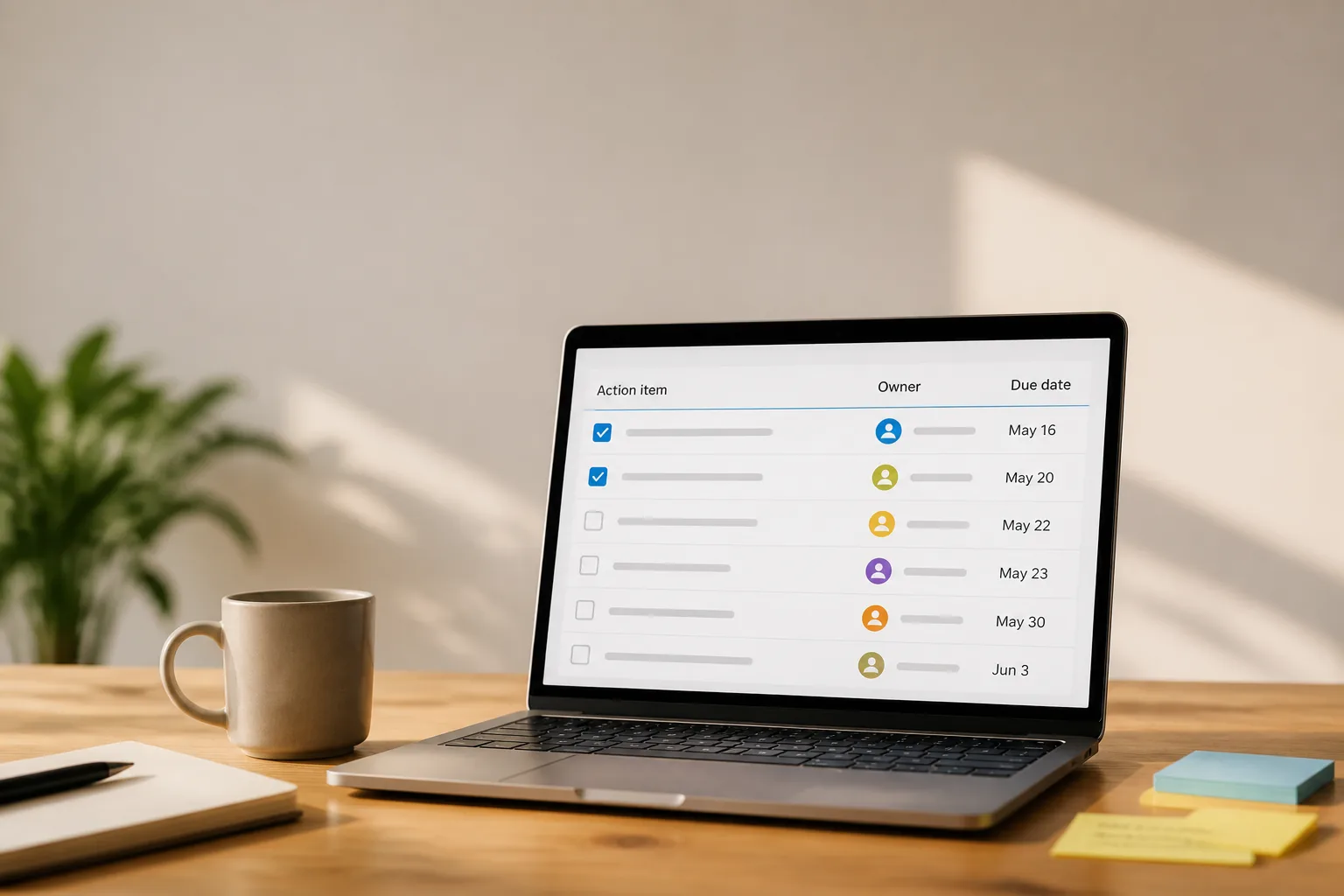
Default to one named owner, never a team. "Engineering will handle it" is how things fall through the cracks. "Priya owns the rollback, done by 5:15, posts in #incidents when it's live" is how things get done. If two people seem to share an action, you don't have an owner yet. Pick one and make the other the backup. Shared ownership is unowned.
A lightweight emergency-meeting agenda
You don't have time to build an agenda when you're calling an emergency meeting; that's rather the point. So keep one saved and ready. It's five lines, it fits in the meeting invite, and the person driving reads it top to bottom.
- Situation (60 seconds). What's happening, what's the impact, and how do we know. Facts only, no theories yet.
- Decision needed (1 line). The specific call or action this group exists to produce, stated as a question.
- Options and trade-offs (5 minutes). The two or three real choices, with the cost of each. No exhaustive debate.
- Decisions and owners (3 minutes). What we're doing, who owns each action, by when. One name per item.
- Communication plan (2 minutes). Who updates whom, through which channel, and when the next check-in is.
Run it in that order and a genuine emergency meeting fits comfortably inside 15 minutes. The discipline of the template is what keeps a stressed room from spiraling into blame, speculation, or a replay of the whole timeline that nobody needs.
Why follow-through is the hardest part
Here's the trap. The meeting goes well, decisions get made, people scatter to act, and then the thread of who-owns-what frays within the hour. In a fast, high-stakes call, nobody has spare attention to take careful minutes; everyone in the room is busy thinking about the crisis, which is exactly as it should be. That's why the notes are usually the thing that gets dropped, and the missing notes are usually why follow-up stalls.
This is a good place to let a tool carry the load that people can't. An AI meeting assistant like Laxis records and transcribes the call and automatically pulls out the decisions, the action items, and the owners, so nobody has to choose between participating and documenting. The follow-up email practically writes itself, and because Laxis works across Zoom, Meet, and Teams and syncs to HubSpot or Salesforce, the record of what was decided is sitting where the next person looks before they've even left the call. When the meeting's over, follow-through has already started.
Don't lose the decisions to the chaos When the room is moving fast, let Laxis capture the decisions, owners, and next steps automatically, so the moment the call ends, the follow-up is already done. Free plan, 40+ languages, works with the tools you already use. Try Laxis Free
The bottom line
The best signal of a healthy team isn't how smoothly it runs emergency meetings. It's how few it needs. When the alarm goes off rarely, people trust it completely, and a calendar that protects that trust is quietly doing more for your real crises than any incident playbook. Spend the word "emergency" like it's the last one you've got, because eventually it might be.
Frequently asked questions
What qualifies as an emergency meeting?
An emergency meeting is justified when three things are true at once: the situation is unexpected, delay would cause material harm, and advance notice on the normal schedule is impractical. In practice that means a live production outage or data breach, a PR or safety crisis, a major deal or customer about to walk, or a sudden leadership or funding change. If the issue can wait until the next standup or be resolved in a thread, it's not an emergency.
What is the cost of calling too many emergency meetings?
Every false alarm trains people to discount the next one. Research on alert fatigue shows clinicians override between 49% and 96% of drug-interaction warnings once they've been desensitized, and the same habituation happens with people. There's also a direct money cost: companies spend an average of $80,000 per professional employee per year on meetings, and about 31% of that goes to meetings the employees themselves call unnecessary.
Who should be invited to an emergency meeting?
Invite only the people who can decide or act on the spot, plus one person to drive and one to capture notes. A useful test is to ask of each name: can this person make a call, fix the thing, or unblock someone in the room? If the honest answer is no, they belong on the update afterward, not on the call. Keeping the group small is what makes a fast meeting possible.
How long should an emergency meeting last?
Timebox it hard, usually 15 to 30 minutes, and state the limit at the top. The goal isn't to solve everything in the room; it's to decide the next two or three concrete actions, assign owners, and agree how you'll communicate. If the work itself takes hours, that happens after the meeting, with a short follow-up check rather than an open-ended call that drifts.
How is an emergency meeting different from a regular meeting?
A regular meeting can afford discussion, context-setting, and exploration. An emergency meeting strips all of that out. You open with the situation and the specific decision needed in the first 60 seconds, you invite only deciders and doers, and you end with explicit decisions, named owners, and a communication plan. Anything that's not in service of resolving the crisis gets parked.