Plaud Note Review: Pros, Cons & Alternatives (2026)

AI Recording Devices
By the Laxis team · Updated July 2026 · 10 min read
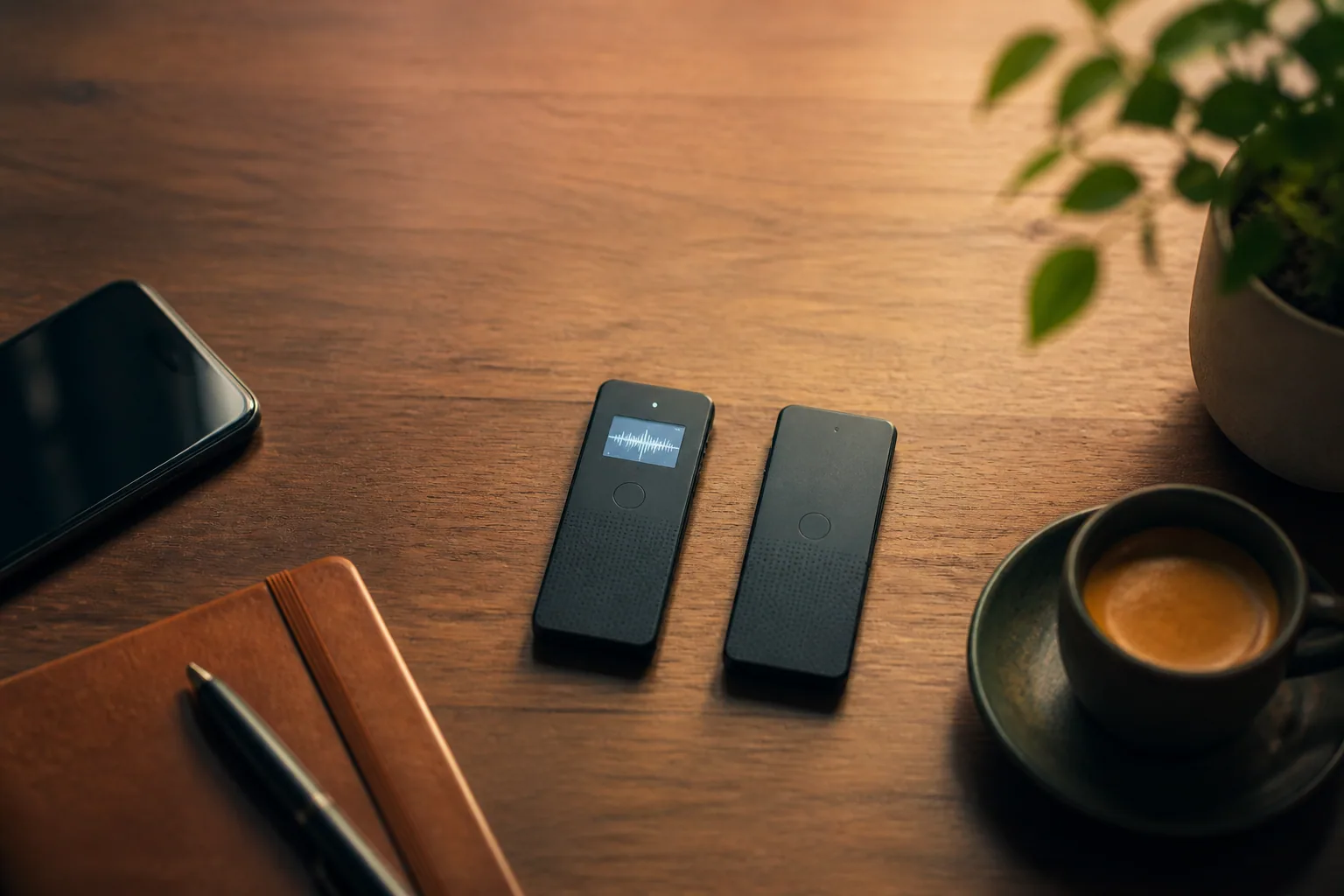
The Plaud Note is a black aluminum card, roughly the size of a credit card and about as thick as four of them stacked, that magnets onto the back of your phone and records whatever you point it at. It costs $159. It has become the default answer to "which AI recorder should I buy" — which is exactly why it deserves a harder look than the unboxing videos give it.
The short version of this Plaud Note review: the hardware is genuinely good, the app is better than the hardware, and the thing that trips people up is neither. It's the subscription math, and the quiet assumption that a recorder solves a meeting problem you may not actually have. Below is the honest rundown — what it nails, where it frustrates, what it costs across a full year, and what else belongs on your shortlist.
The short verdict
Choose Laxis if you'd rather not add a recorder to your pocket. The Laxis mobile app records in-person conversations and phone calls, OSO AI Earbuds capture the same from your ears, and your Zoom, Meet and Teams calls land in that one workspace, recorded bot-free by the desktop app.
Try Laxis free — 14-day Premium trial, no credit card. See the full Laxis vs Plaud comparison
What the Plaud Note actually is
Strip away the marketing and the Note is three things stacked together: a very thin voice recorder, a magnet, and a cloud app.
The recorder measures 3.37 x 2.13 x 0.12 inches and weighs 1.06 ounces. It carries 64GB of onboard storage and a 400mAh battery that Plaud rates at up to 30 hours of continuous recording and 60 days of standby. Two MEMS microphones plus a separate voice processing unit handle audio, with a pickup range of about 9.8 feet. On the edge sit a record button and a mode toggle — you slide between meeting mode and call mode yourself.
The magnet is the part that makes it different from every other pocket recorder. The Note ships with a MagSafe-style case and a stick-on magnetic ring, so it rides on the back of your phone and goes everywhere the phone goes. In call mode it picks up phone conversations straight through the handset — no Bluetooth pairing, no speakerphone, no third-party dialer.
The cloud app is where the AI lives. Recordings sync to Plaud's servers, get transcribed across 112 languages with automatic speaker labels, then run through a summary template. You choose the model — GPT, Gemini, and Claude options are all offered — and the output format, from a template library Plaud puts north of 10,000, or you write your own prompt. Mind maps, custom vocabulary, and 27-plus export formats sit in the same app. Nothing is processed on the device itself.
Where the Plaud Note earns its price
Three of its strengths are things software genuinely cannot copy, and one is a pleasant surprise.
In-person capture that doesn't derail the room. Set it on the table and it disappears. No laptop lid open between you and the person you're talking to, no bot tile appearing in a grid, no phone screen lighting up mid-sentence. For client visits, site walks, doctor's appointments, lectures, and interviews, a dedicated recorder is simply the right tool. Reviewers who've dropped it on a busy lunch table report it separating four voices over background music without much trouble.
Phone calls, without a workaround. Recording a mobile call cleanly is a genuinely hard problem, and the Note's magnet-and-vibration approach solves it more elegantly than any app can on a locked-down phone OS. If a meaningful share of your work happens on the phone, this alone can justify the purchase.
A battery that isn't your phone's battery. Thirty rated hours of recording and two months of standby means you can leave it in a bag and forget about it. Long software recordings, by contrast, eat the device you also need for maps, email, and the calendar invite you're running late for.
The app punches above the hardware. The template library is the real product. Journalists can output a formatted Q&A, recruiters a structured candidate summary, clinicians a visit note. Custom prompts work well, industry glossaries improve accuracy on jargon, and you can correct speaker labels once and have the app remember. Tom's Guide rated its transcription above the online services their reviewer had been using; the iOS app holds a 4.9 average across roughly 16,000 App Store ratings, and Plaud sits at 4.6 on G2. Those are not vanity numbers for a hardware startup.
Two smaller things that matter more than they should. The first is press-to-highlight: a short press on the device during a conversation flags that moment, and the flag survives into the AI summary afterwards. It's the closest thing to underlining something without breaking eye contact, and once you've used it, going back to scrubbing a two-hour recording for "the bit where she mentioned the budget" feels absurd. The second is the compliance paperwork. Plaud lists ISO 27001, ISO 27701, SOC 2 Type II, GDPR, and HIPAA compliance, which is the difference between "my IT team said no" and a device a clinician or a lawyer can actually carry. Plenty of consumer AI gadgets never bother; for a device whose entire job is holding other people's words, it's the right investment.
Ask this before you add to cart: where do your meetings actually happen? Count last week. If four out of five were Zoom, Google Meet, or Teams calls taken at a desk, you're about to spend $159 on hardware to solve a software problem — and you'll still need something to get the notes into your CRM. Meeting assistants like Laxis, Otter, or Fathom capture those calls from the laptop you already own. Hardware earns its keep when the conversation happens in a room, in a car, or on a phone call. That's a real and common situation. It just isn't everyone's.
The friction you find in week three
Nothing here is a dealbreaker on its own. Together they're the reason some Plaud Notes end up in a drawer.
The recurring complaints
- The charging cable is proprietary. Not USB-C — a magnetic connector unique to Plaud. Forget it on a trip and there is no borrowing one from a colleague. Buyers also report the magnetic connection feeling looser over time. PCWorld's reviewer said outright they'd have preferred a slightly thicker device with a standard port.
- Everything depends on the app and the cloud. There's no on-device AI, so recordings have to sync before they mean anything. Tom's Guide put the long-term concern plainly: strip away the app and you're holding a voice recorder, and voice recorders are not scarce.
- Minutes expire. Free Starter is 300 transcription minutes a month; Pro is 1,200. Unused minutes do not roll over — they reset at your billing date. Recording never stops when you hit the cap, only transcription does, so you either buy a top-up (600, 3,000, or 6,000 minutes) or wait for the reset with a pile of un-transcribed audio.
- Call recording has sharp edges. You can't use headphones during a recorded phone call, and reviewers found some Android handsets fussier than iPhones about the magnet placement.
- AI is still AI. Names get mangled in bigger meetings, slang and niche jargon slip through, and summary "suggestions" can read confidently wrong because the model is missing context everyone in the room already had.
- Integrations are thin for revenue teams. Plaud connects through Zapier, Google Calendar, and an MCP server. There's no native HubSpot or Salesforce sync, so if a call summary needs to land on a deal record, that's an automation you build and maintain yourself.
One more thing that isn't a product flaw but will shape how you use it: consent. A bot joining a video call announces itself to everyone on the grid. A card on a table does not. Two-party-consent states aside, the decent move is a one-line heads-up at the start — "I've got a recorder running so I can stay present, is that alright?" It lands better than someone spotting the device halfway through.
What a Plaud Note really costs in year one
The $159 is the entry fee, not the bill. Here's the actual arithmetic, using Plaud's current published pricing.
| Plan | Transcription included | Annual billing | Month to month | Year one with a $159 Note |
|---|---|---|---|---|
| Starter (free) | 300 min/month (5 hrs) | $0 | $0 | $159 |
| Pro | 1,200 min/month (20 hrs) | $8.33/mo ($99.99/yr) | $17.99/mo | $258.99 |
| Unlimited | Up to 24 hrs/day | $19.99/mo ($239.99/yr) | $29.99/mo | $398.99 |
| Team | Up to 24 hrs/day per seat | $20/user/mo (launch offer) | $28/user/mo (launch offer) | $399 per seat |
Plaud's Team launch pricing runs through August 31, 2026, after which the published rates rise to $25 and $35 per user per month.
Five hours of free transcription a month sounds generous until you record two client visits and a one-hour interview. Most people who use the device daily land on Pro, which puts the true first-year cost around $259 — reasonable for a tool that replaces post-meeting cleanup, and worth naming honestly before you buy rather than discovering it on a renewal notice.
Do the hours math first. Add up the conversations you'd genuinely want transcribed in a normal month. Under 5 hours, the free tier carries you and the device is a one-time $159. Between 5 and 20 hours, Pro is the honest number. Above 20 hours, you're on Unlimited, and at $399 in year one it's worth comparing against software that includes unlimited transcription for less and needs no hardware at all.
The alternatives worth putting on your shortlist
"Plaud Note alternative" usually means one of two different questions: a different recorder, or no recorder at all. Both are covered here, and if the answer turns out to be software, our roundup of the best AI note-takers goes deeper on that side.
Laxis — best if most of your meetings are online
Laxis is a software meeting assistant rather than a device. It joins or quietly records your Zoom, Google Meet, and Microsoft Teams calls, transcribes across 100+ languages, writes the summary, and pulls out action items and next steps — then syncs those into HubSpot or Salesforce, which is the piece no Plaud device does natively. It has a bot-free capture mode, so there's no extra participant sitting in the grid, and a mobile app that handles in-person recording without a second gadget in your bag. An AI voice keyboard for dictation comes bundled in the same subscription. The free plan includes 300 transcription minutes a month; Premium is $15.99 per user per month with 2,000 transcription minutes a month and AI Chat; Business is $29.99 for team admin controls and CRM sync.
If you decide you do want hardware after all, Laxis makes its own AI recorders: the OSO AI Earbuds, which record calls and in-person conversations from your ears rather than a card on your phone (how they stack up against the Plaud Note), and the Panocore 360 for conference rooms. Both feed the same workspace as the software, so a hallway conversation and a Zoom call end up in one place.
Honest tradeoffs: processing happens in the cloud, not on-device, so it isn't the pick for anyone who needs local-only audio. The software on its own relies on your phone or laptop microphone rather than a purpose-built four-mic array, so for a boardroom of eight people you want the Panocore or a dedicated recorder, not the app alone. And it's a smaller brand than the incumbents, so you won't find as many YouTube walkthroughs.
Plaud Note Pro — if you want the hardware, upgraded
The $189 Note Pro is the same card in a nicer suit: a small AMOLED display so you can see recording status without opening the app, four microphones instead of two, a 16.4-foot pickup range, automatic switching between call and meeting modes, Apple Find My, and a 50-hour endurance battery mode. Same size, same 64GB, same app, same subscription. Our full Plaud Note Pro review works through whether the upgrade is worth the extra $30.
Plaud NotePin and NotePin S — hands-free capture
If the card format is wrong for you, Plaud's pin-shaped wearables clip to a collar or lapel. The NotePin is $159 with a 270mAh battery rated at 20 hours; the NotePin S is $179 with a 320mAh battery, a tactile record button, press-to-highlight, and four wearing accessories in the box. Both keep the 64GB storage and 9.8-foot pickup range. Neither records phone calls the way the Note does.
Otter.ai — the familiar free tier
Otter's free plan covers 300 minutes a month with a 30-minute cap per conversation, and its mobile app is well suited to capturing live conversations and voice memos. Real-time transcript sharing during a meeting is a genuine strength. Summaries and action items are lighter than the sales-focused tools, and the deeper integrations sit on higher tiers.
Fathom — the most generous free plan for video calls
Fathom records and transcribes video calls with no minute cap on its free tier, which is rare. The catch in 2026 is that advanced AI summaries are limited to about five calls a month before you need a paid seat. It has no answer at all for in-person or phone-call capture.
Your phone plus an AI chat — the $0 baseline
Voice Memos on iPhone or Recorder on Pixel, then paste the transcript into ChatGPT, Claude, or Gemini with a prompt. It's clumsy, the audio quality depends entirely on where your phone is sitting, and there's no speaker labeling worth the name. But it costs nothing, and testing it for a week tells you whether you actually want a recorder or just want better notes.
How the options compare
| Option | Type | In-person capture | Phone calls | Zoom / Meet / Teams | CRM sync | Entry cost |
|---|---|---|---|---|---|---|
| Laxis | Software | Via mobile app | Via mobile app or OSO AI Earbuds | Native, bot-free option | HubSpot, Salesforce (Business) | Free (300 min/mo) |
| Plaud Note | Hardware + app | Strong (2 mics, 9.8 ft) | Yes, via magnet | Via desktop app | Zapier only | $159 + plan |
| Plaud Note Pro | Hardware + app | Strongest (4 mics, 16.4 ft) | Yes, auto-detected | Via desktop app | Zapier only | $189 + plan |
| Plaud NotePin S | Wearable + app | Strong, hands-free | No | Via desktop app | Zapier only | $179 + plan |
| Otter.ai | Software | Via mobile app | No | Native | Higher tiers | Free (300 min/mo) |
| Fathom | Software | No | No | Native | Yes | Free (5 AI summaries/mo) |
Prices and plan limits change often. Treat this as a starting map and check each vendor's page before you buy.
Who should actually buy a Plaud Note
Buy it if your important conversations happen face to face or on the phone: consultants doing client visits, clinicians and therapists, recruiters, journalists, students in lecture halls, field sales reps who spend more time in cars and lobbies than on video calls. In those jobs the Note is close to the best $159 you can spend, and the free 30-day return policy makes trying it low-risk.
Skip it if your calendar is a wall of video calls. You'd be buying a microphone for a problem that lives in your browser, and you'd still have a gap between the summary and wherever your team actually tracks work. Software handles that case for less money and no cable to lose.
Buy both if you genuinely straddle the two, which more people do than admit it. A recorder for the room and a meeting assistant for the calendar is a reasonable stack — just go in knowing you're paying two subscriptions and decide which one carries your record of the week.
Switching from a Plaud Note to Laxis
Start with the archive. The Plaud app exports each recording's original audio as MP3 or WAV, one file at a time, along with its transcript and summary. Upload the audio you still need to Laxis, which takes audio and video files, so last quarter's client visits become searchable next to new calls. Uploads draw on your monthly transcription minutes, so bring the important ones over first, and if you pay for Plaud Pro or Unlimited, finish exporting before you cancel. From then on, phone calls and face-to-face conversations go through the Laxis mobile app or a pair of OSO AI Earbuds, and video calls through the desktop app with nothing joining.
Most of your meetings already happen on Zoom, Meet, and Teams
Laxis records, transcribes, and summarizes them across 100+ languages, pulls out action items and next steps, and syncs it all to HubSpot and Salesforce for Business-plan teams — with a bot-free capture option and no hardware to charge. Free plan included.
Try Laxis free — 14-day Premium trial, no credit card.
The bottom line
The Plaud Note is a good product sold slightly askew. The reviews treat it as an AI breakthrough; it's really a very well-made recorder attached to an unusually good app, and the AI inside is the same handful of models everyone else is calling. That's not a criticism — the packaging is the value, and Plaud has packaged it better than anyone.
The mistake is buying it as a general answer to "I have too many meetings." It's a specific answer to "I have conversations software can't reach." If that's your week, it's an easy recommendation. If it isn't, the $159 and the annual plan are better spent on something that meets your calls where they already are.
Frequently asked questions
Is the Plaud Note worth it in 2026?
It is worth it if you regularly record conversations that happen in a room or on a phone call. At $159 plus a subscription, the Plaud Note pays for itself for consultants, clinicians, journalists, and field sales reps. If nearly all your meetings run on Zoom, Google Meet, or Teams, software captures those calls without buying hardware.
How much does the Plaud Note cost per month?
The device is a one-time $159, and the Starter plan is free with 300 transcription minutes a month. Beyond that, Plaud Pro is $8.33 a month billed annually ($99.99 a year) for 1,200 minutes, or $17.99 month to month. Unlimited is $19.99 a month billed annually, or $29.99 monthly.
Does the Plaud Note work without a paid subscription?
Yes. Every Plaud device includes the free Starter plan with 300 transcription minutes per month and access to the Plaud Intelligence features. Recording itself is never capped, so if you run out of minutes the device keeps capturing audio and only transcription pauses until your quota resets or you buy a top-up.
Can the Plaud Note record phone calls?
Yes. You attach the Note to the back of your phone with the included magnetic case or ring, flip it to call mode, and it captures both sides of the conversation through the handset without any Bluetooth pairing. The tradeoff is that you cannot use headphones during a recorded call, and some Android handsets are fussier than iPhones.
What is the difference between the Plaud Note and the Plaud Note Pro?
The Note Pro costs $189 versus $159 and adds a small AMOLED display, four microphones instead of two, a 16.4-foot pickup range instead of 9.8 feet, automatic switching between call and meeting modes, Apple Find My, and a 50-hour endurance battery mode. Storage, size, weight, the app, and the subscription are identical.
Is there a Plaud Note alternative that does not need hardware?
Yes. Software meeting assistants such as Laxis, Otter, and Fathom record and summarize Zoom, Google Meet, and Teams calls from the laptop you already own, with free tiers to test. Laxis also has a mobile app for in-person recording and, on its Business plan, syncs notes to HubSpot and Salesforce, which no Plaud device does natively.
Is Laxis a good alternative to the Plaud Note?
Laxis is a good alternative to the Plaud Note if you want phone calls, in-person conversations and video meetings in one workspace without carrying a recorder. Phone and in-person capture run through the Laxis mobile app or OSO AI Earbuds.