How to Run an Effective Project Post-Mortem Meeting (+ Template)
The launch went sideways at 2 a.m. By morning the fire was out, and someone scheduled a meeting titled "Post-Mortem." Everyone walked in bracing for the part where a name gets attached to the outage. That dread is exactly why most of these reviews fail.
A post mortem meeting is supposed to make your team smarter, not smaller. Done right, it turns a painful event into a short list of fixes that stop the same failure from happening twice. Done wrong, it becomes a quiet tribunal where people learn one lesson only: next time, don't admit anything. The difference between those two outcomes isn't the agenda. It's whether the room is safe enough to tell the truth.
What a post-mortem meeting actually is
A post-mortem is a structured review held after a specific event to reconstruct what happened and decide what to change. The trigger is the key word. You don't run one on a schedule. You run one because something happened: a product shipped, a service went down, a project crossed the finish line.
And here's a point teams miss. A post-mortem isn't only for disasters. The best teams hold one after a launch that went well, an incident or outage, and a project close regardless of how it landed. A smooth launch hides decisions that happened to work this time and won't next time. Reviewing a win is how you find out which parts were skill and which parts were luck.
It helps to know what a post-mortem is not. A retrospective runs on a fixed cadence, usually every sprint, and looks broadly at team process whether or not anything broke. A post-mortem is narrow and event-driven: one incident, one timeline, one root cause. A lessons-learned document is the artifact, the written record of insights you file away so a future team can retrieve it. The meeting produces the lessons; the doc stores them. Mature teams use all three, and they don't pretend any one replaces the others.
The non-negotiable: a blameless culture
If you take one idea from this article, take this one. A blameless post mortem focuses on what went wrong, not who was wrong. It investigates the systems, processes, and missing information that let a mistake slip through, instead of pinning the event on a person.
This isn't a soft, feel-good preference. The idea came out of healthcare and aviation, industries where a covered-up mistake can kill someone, and where every error gets treated as a chance to strengthen the system. The logic transfers cleanly to any team. When people fear being shamed or fired, they stop surfacing problems. Incidents get swept under the rug, and the organization carries more hidden risk, not less. Remove the blame and you remove the incentive to hide.
The shift is concrete. Instead of "your deploy took down checkout," you ask "why was it possible for a single deploy to take down checkout with no safeguard?" The first version ends a conversation. The second one opens a real fix: maybe you needed a staging gate, or an alert that fired earlier, or a rollback that took seconds instead of an hour. Blame finds a culprit. Blamelessness finds the gap, and the gap is the only thing you can actually patch.
Tip: Replace "who" with "what" in real time. Keep one phrase ready as the facilitator: "Let's reframe that as a system question." When someone says "Jordan forgot to flip the flag," you respond, "So the process let a release ship with a manual step that's easy to miss. What would have caught it?" You're not protecting Jordan. You're aiming the energy at the thing you can fix.
An agenda that keeps the room on track
A good post-mortem follows the same arc every time, which is part of why it works. People relax when the structure is predictable. Aim for 60 to 90 minutes, and assign two roles before anyone walks in: a neutral facilitator to keep the discussion balanced and a scribe to capture every fact and decision. Here's the flow.
1. Set the tone (2 minutes)
The facilitator opens by stating the blameless principle out loud. Not as a throwaway line. Say plainly: we're here to understand the system, not to assign fault, and I'll redirect anyone who slips into blame. Naming it at the top gives the facilitator permission to enforce it later.
2. Recap the timeline and the facts (15–20 minutes)
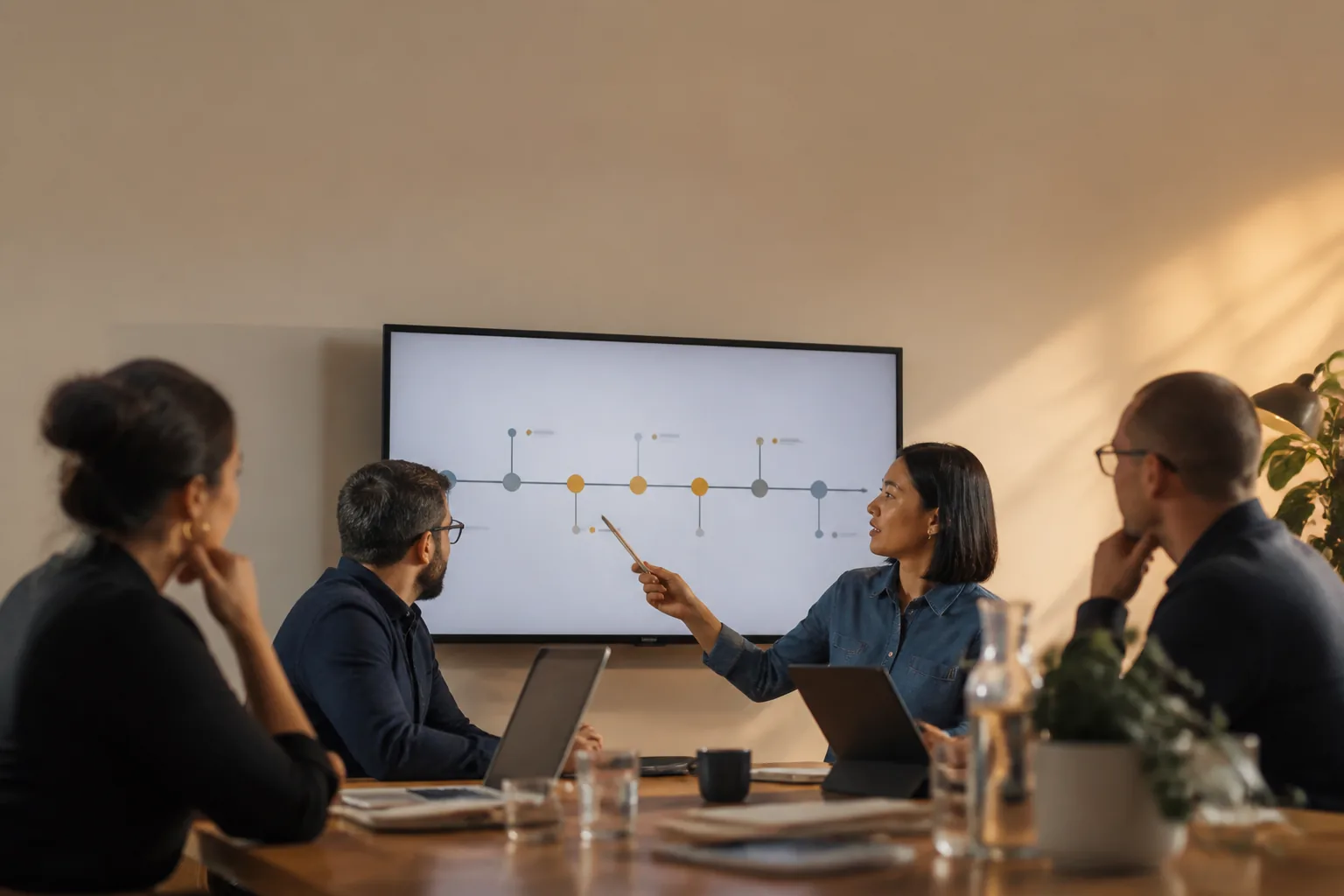
Walk the sequence of events in order, from the first signal to full resolution. Pull from logs, chat history, ticket timestamps, and project docs so the timeline is built on facts, not memory. Include events that seem trivial; small details often turn out to be the hinge. Resist diagnosing here. The goal is a shared, agreed account of what happened before anyone argues about why.
3. What went well (10 minutes)
Cover this honestly, even after a bad outcome. What detection worked? Who made a smart call under pressure? Naming the wins protects the practices worth keeping and signals that the meeting isn't a punishment.
4. What went wrong (10–15 minutes)
List the breakdowns plainly, as system events rather than personal failings. "The alert fired 40 minutes after the error rate spiked" is useful. "Ops was slow" is not.
5. Root-cause analysis with the 5 Whys (15–20 minutes)
This is where you go deep. The 5 Whys means asking "why" repeatedly, roughly five times, until you reach the broken process behind a symptom instead of the symptom itself. Five isn't a magic number; it's shorthand for "keep digging until you hit something structural."
One iron rule, straight from the people who run this technique daily: a person is never an acceptable root cause. "Human error," "Team B's mistake," and "someone wasn't paying attention" are all signs you stopped too early. If a "why" lands on a person, ask why the system let that person fail. A quick example:
- The checkout page went down. Why?
- A bad config shipped to production. Why?
- It passed review without anyone catching the typo. Why?
- Config changes aren't validated by an automated test. Why?
- We never built one because configs "rarely change." Root cause: no automated guardrail for a high-risk, low-frequency change.
Notice the answer is a missing system, not a careless engineer. That's the whole point.
6. Action items with owners (10 minutes)
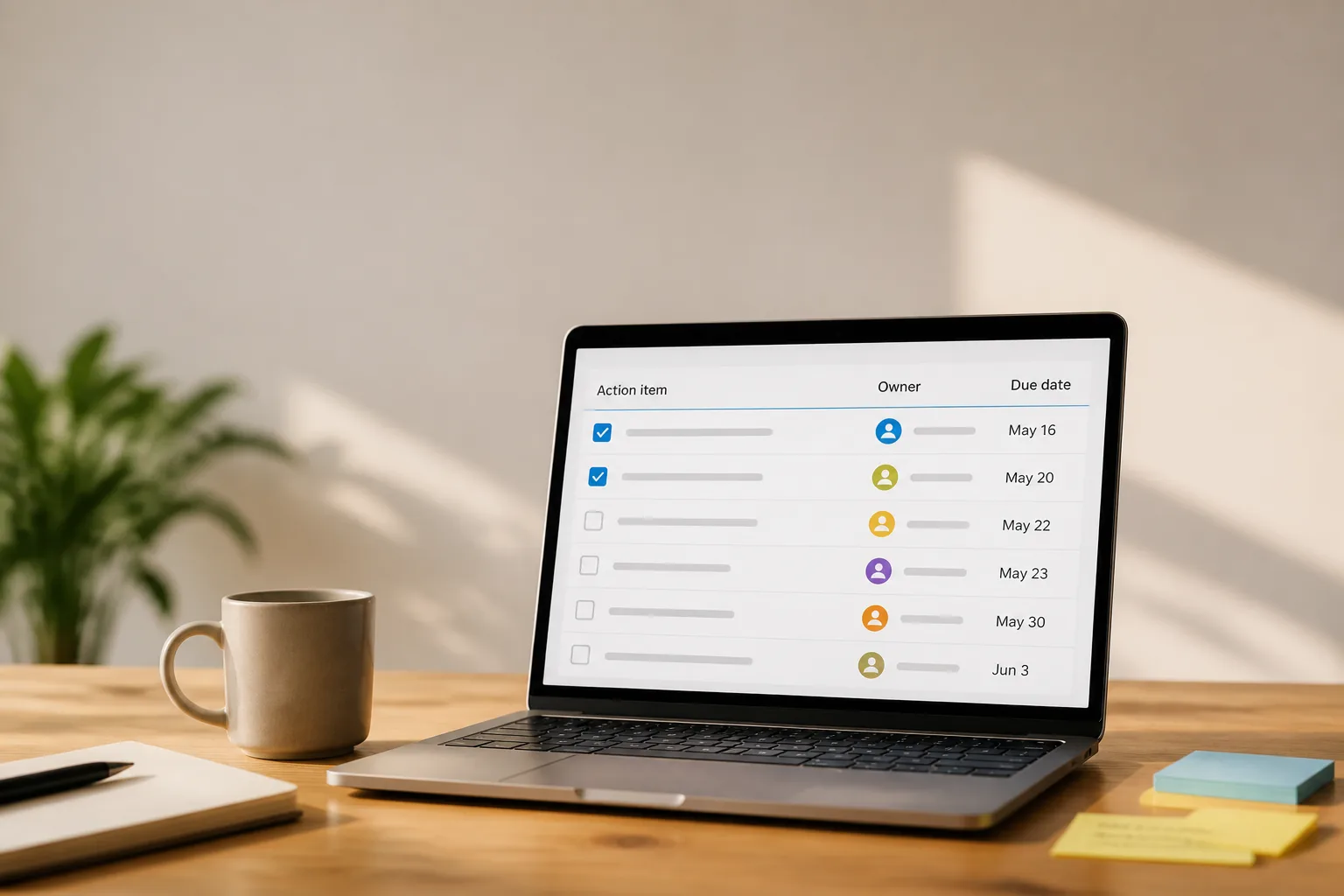
End on specifics or the meeting was theater. Every action item needs a named owner and a due date. A vague "we should improve testing" dies in the doc. "Add a config-validation test to CI — owner: Priya — by July 10" gets done. This is the deliverable the whole hour exists to produce.
Tip: Cap your action items at three to five. A post-mortem that generates 20 follow-ups generates zero follow-ups. Force the room to pick the few changes that would have most changed the outcome, and assign those. You can always run another review later. You can't make an over-stuffed list happen.
Facilitation that protects psychological safety
The agenda is the skeleton; facilitation is whether it survives contact with a stressed team. A few practices make the safety real instead of stated.
Invite everyone the event touched. Have a representative from each function that was affected in the room, so no department becomes the absent party everyone blames. Use a neutral facilitator who didn't own the work under review, because someone defending their own decisions can't referee fairly. Watch your language and model the swap from "you" to "the process" until the room starts doing it on its own. And let people who were closest to the failure speak first and speak safely; they hold the most useful detail, and they'll only share it if the first person who admits a gap gets thanked instead of pounced on.
One more thing that quietly matters: write everything down where everyone can see it. When the timeline and the decisions are captured live and shared, nobody relitigates the facts a week later, and the action items don't evaporate. Memory is the enemy of accountability.
Where the notes make or break it
In a post-mortem, the facts and the action items are everything. If the timeline is fuzzy or the owners never got written down, you held a venting session, not a review. The trouble is that the most valuable moments happen while the facilitator is fully engaged in the conversation, not typing, and a distracted scribe misses half the causal chain.
This is where an AI notetaker earns its place. A tool like Laxis records and transcribes the meeting, so the timeline discussion is captured word-for-word, then auto-extracts the action items, decisions, and next steps with their owners. Instead of one person frantically trying to listen and write at once, the facilitator stays present and the agreed fixes land in a clean summary you can drop straight into your lessons-learned doc. It works across Zoom, Meet, and Teams, supports 40+ languages, and syncs to HubSpot or Salesforce if the follow-ups need to reach those systems. The point isn't fancy notes. It's that the same failure doesn't repeat because the fix actually got recorded and assigned.
A copy-paste post-mortem template
Drop this into a doc or your meeting tool and fill it in as you go. It maps directly to the agenda above.
Post-Mortem Meeting Agenda & Template
Event: [launch / incident / project name]
Date of event: [date] | Review date: [within 24–72 hrs]
Facilitator: [name] | Scribe / notetaker: [name or tool]
Attendees: [one rep per affected function]
0. Ground rule (read aloud): This is blameless. We focus on systems and processes, not people.
1. Impact summary: What was affected, for how long, and who felt it.
2. Timeline (facts only):
[time] — [what happened]
[time] — [what happened]
[time] — resolved
3. What went well: [keep these]
4. What went wrong: [system events, not blame]
5. Root cause — 5 Whys:
Why? → [ ]
Why? → [ ]
Why? → [ ]
Why? → [ ]
Why? → Root cause: [a missing system, never a person]
6. Action items (max 3–5):
[action] — Owner: [name] — Due: [date]
[action] — Owner: [name] — Due: [date]
7. Where this doc lives: [link to lessons-learned archive]
Capture the timeline and the fixes automatically
Laxis records and transcribes your post-mortem, then pulls out the action items, decisions, and owners so nothing gets lost between the meeting and the fix. Stay present, facilitate well, and let the notes write themselves.
The bottom line
The real test of a post-mortem isn't the meeting. It's what happens six weeks later. If you walk into the next review and find the same root cause wearing a different costume, the first one didn't work, no matter how good the discussion felt. A post-mortem only counts when an action item ships and quietly closes a door that won't open again. Treat every review as a promise to your future self, and judge it by whether you kept that promise.
Frequently asked questions
What is a post mortem meeting?
A post mortem meeting is a structured review held after a specific event, such as a product launch, an outage, or a project close, to reconstruct what happened and decide how to prevent the bad parts from repeating. It's incident-specific and centers on a fact-based timeline, root-cause analysis, and a list of action items with owners and due dates.
When should you hold a post mortem meeting?
Hold it after the dust settles but before memory fades, ideally within 24 to 72 hours of the event resolving. That window is late enough for emotions to cool and early enough that people still remember the details. Run one after any launch, incident, or project close, whether the outcome was good or bad.
What does a blameless post mortem mean?
Blameless means the meeting investigates systems and processes, not individuals. The principle originated in healthcare and aviation, where mistakes can be fatal. When people aren't afraid of being punished, they report problems honestly, which lets you fix the conditions that allowed the failure rather than scapegoating one person.
How is a post mortem different from a retrospective?
A retrospective runs on a regular cadence, like every sprint, and reviews team process across a fixed window regardless of whether anything went wrong. A post mortem is triggered by a specific event and digs into one incident's timeline and root cause. Many teams use both: retrospectives for routine course correction, post mortems after a major milestone or disruption.
What is the 5 Whys technique in a post mortem?
The 5 Whys is a root-cause method where you ask why repeatedly, usually around five times, until you reach the broken process behind a symptom rather than the symptom itself. A core rule: a person is never an acceptable answer. If "why" lands on human error, keep going to find the system that allowed the error.